Two Florida rules get mixed up on almost every storm call we run in Lakeland and Plant City. One is a building-code rule about how much of a roof you can patch. The other is an insurance rule about roof age. They are not the same statute, they do not decide your claim by themselves, and mixing them up is how people budget for a patch and get quoted a full tear-off.
This page is the dedicated answer to what is the 25% roofing rule in Florida. The age rule lives on what is the 15 year roof rule in Florida. It is not legal advice and it is not a read of your policy. Confirm the code side with your building department and the coverage side with your insurer.
True Roofers is a licensed Florida roofing contractor, CCC1332725. We photograph what we find. We do not file your claim or adjust it.
The 25% roofing rule, in one paragraph
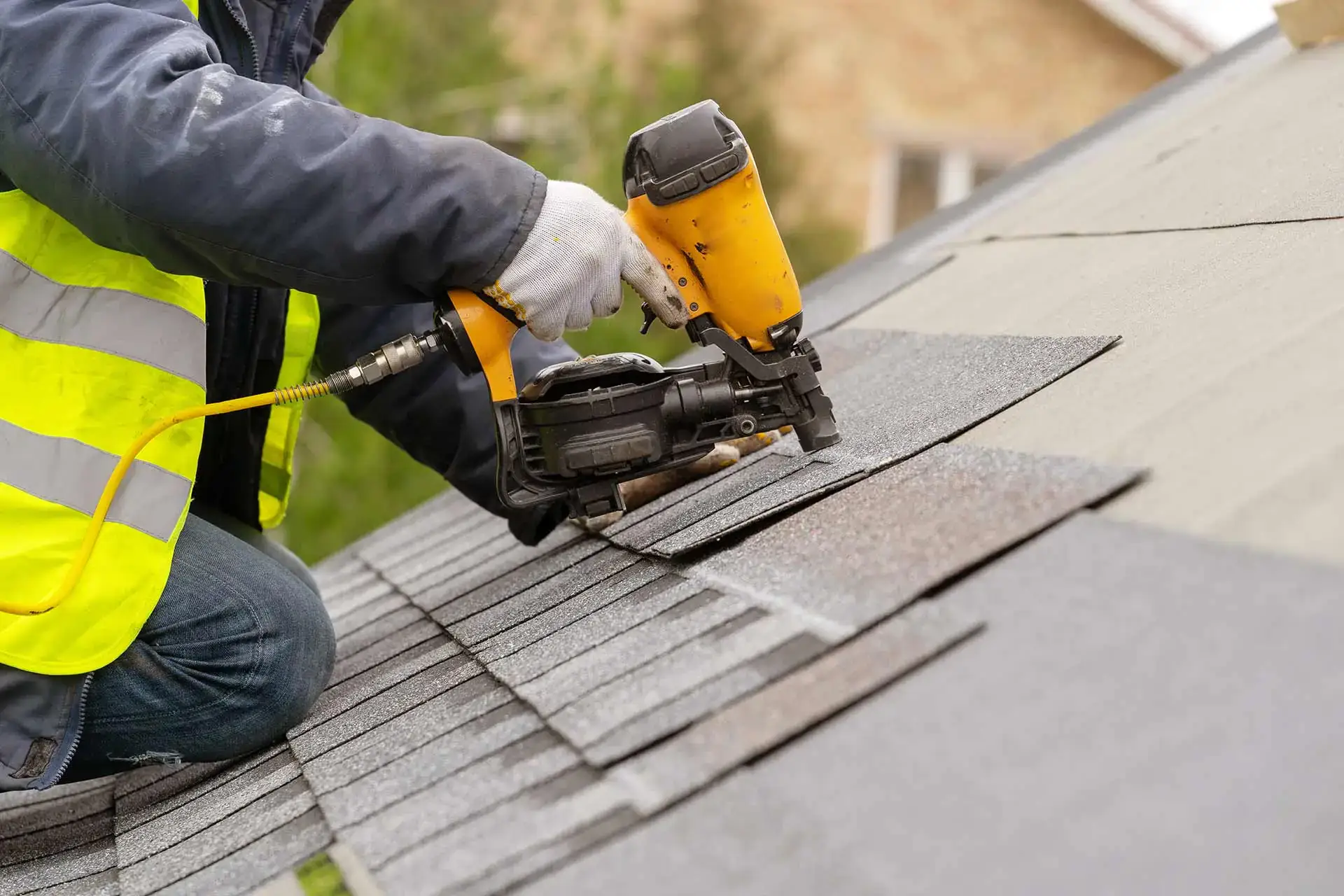
Under the Florida Building Code, Existing Building, section 706.1.1, if more than 25% of a roof section is repaired or replaced within any 12-month period, that whole section generally has to be brought up to current code. On a lot of Central Florida houses, “brought up to current code” means the honest scope is a replacement of that section, not another patch.
The unit that matters is the section, not the whole house. A small gable over the garage can trip the rule even when the rest of the roof is fine. A hip roof with several planes is counted plane by plane.
The 2007 code exception, and the date people get wrong
There is a carve-out. Florida Statute 553.844(5), added by SB 4-D in 2022, lets many roofs that were built or replaced under the 2007 Florida Building Code or later repair only the damaged portion to code, instead of dragging the whole section up.
The trap: the 2007 Florida Building Code did not take effect until March 1, 2009. A roof installed in 2008 is not automatically on the 2007 code. If a contractor tells you a 2008 roof “qualifies for the exception” without checking the permit, ask them to show the date.
Which side of that line your Lakeland or Plant City roof sits on is why a free roof inspection with photos is the first move, not a handshake patch.
What this looks like after a storm
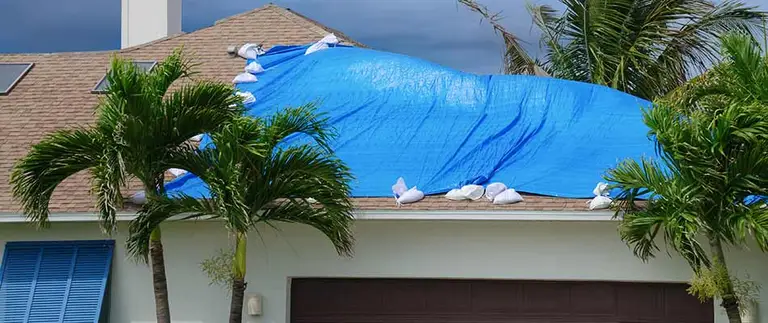
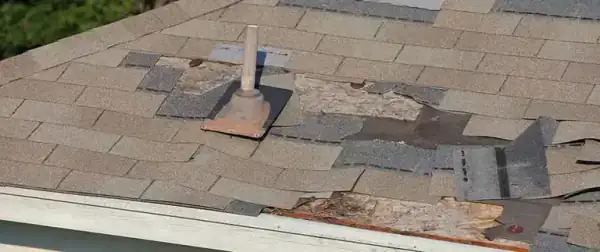
A limb takes a slice of shingles off a south plane. The opening is maybe 80 square feet. That can look like a one-afternoon roof repair. If that plane is 300 square feet, 80 is already over 25%, and the building department can require the rest of that section to current code.
That is when the conversation shifts to roof replacement. Not because we want the bigger job. Because a patch the county will not pass is money you spend twice.
If water is coming in tonight, that is emergency roof repair and often roof tarping first. The 25% math happens after the roof is dry enough to measure.
An active drip with no missing section is usually roof leak repair at a boot or a flashing run. That kind of job rarely trips 25%. A wide wind-stripped plane often does.
How this collides with roof age
A Plant City ranch with a 2004 shingle roof takes hail. The adjuster counts squares. If more than 25% of a section is damaged, code can force that section to current standard. Separately, because the roof is past 15 years, the insurer can talk about remaining useful life. Those are two different fights. One is the building department. One is the policy. Full write-up of the age rule: what is the 15 year roof rule in Florida.
We put the section math in writing after the inspection. Your insurer decides coverage. Your building department decides the permit. We do not interpret the policy or file the claim.
How we measure the section on site
We do not pace the hole and call it a percentage. On a gable, the section is that plane: eave to ridge, rake to rake. On a hip, each face is its own section. Garage gables and porch roofs count on their own. A small plane over the garage can cross 25% while the main house is barely touched.
The damaged area is what has to be repaired or replaced, not the stain on the ceiling. Missing shingles, broken tile, and underlayment that has to come off all sit in that area. A pipe boot and a few feet of flashing usually stay under the line. A wind-stripped slope often does not. The 12-month window matters. Patches already done on that same section this year count toward the 25%. If a crew patched it in the spring and a storm opens more of it in September, we need both areas before we tell you a patch will pass.
The number goes in the written inspection. Your building department decides the permit. We do not guess their call from the driveway.
What to take to the building department
The permit history for the roof, if you have it. The date the roof was built or last replaced is what decides the 2007-code exception. A roof installed before March 1, 2009 is not automatically on the 2007 Florida Building Code, even if someone rounds the year to 2008. If the permit says the roof went on under the 2007 code or later, bring that page. The exception is how a repair can stay a repair.
Also bring the section sketch: plane size, damaged size, and the date of the storm. Photos from the ground help. Our inspection file has the roof-level shots. Inside Lakeland city limits the window is the City of Lakeland Building Inspection Division. Unincorporated Polk addresses go through Polk County. Plant City has its own building division. The rule is the code. The counter that stamps the permit is local.
Claim clocks, so you do not sit on it
Under Florida Statute 627.70132, hurricane and windstorm claims generally have one year from the date of the storm to give notice, and 18 months for a supplemental claim. Confirm the deadline with your carrier. Notice is not the same thing as “the claim is finished.”
Photograph from the ground. Stay off a wet roof. Then call.
What to do this week in Lakeland or Plant City
- If water is in the house, call (813) 800-1800 or the 24/7 inspection line (863) 880-2041.
- If a storm opened a plane, have someone measure the section, not just the hole, before you approve a patch.
- If the letter is about roof age, not a hole, start with the 15 year roof rule and a free roof inspection.
Lakeland office: (863) 624-6590, 2829 Badger Rd #19. Plant City HQ: (813) 743-4487, 4000 N Frontage Rd.
For the city pages, start with roofing in Lakeland or Plant City roofing. For claim paperwork traps, see common roof insurance claim mistakes Lakeland homeowners should avoid.
License CCC1332725. 4.9 stars on Google, 240+ reviews. 12+ years on these roofs. Call (813) 800-1800.